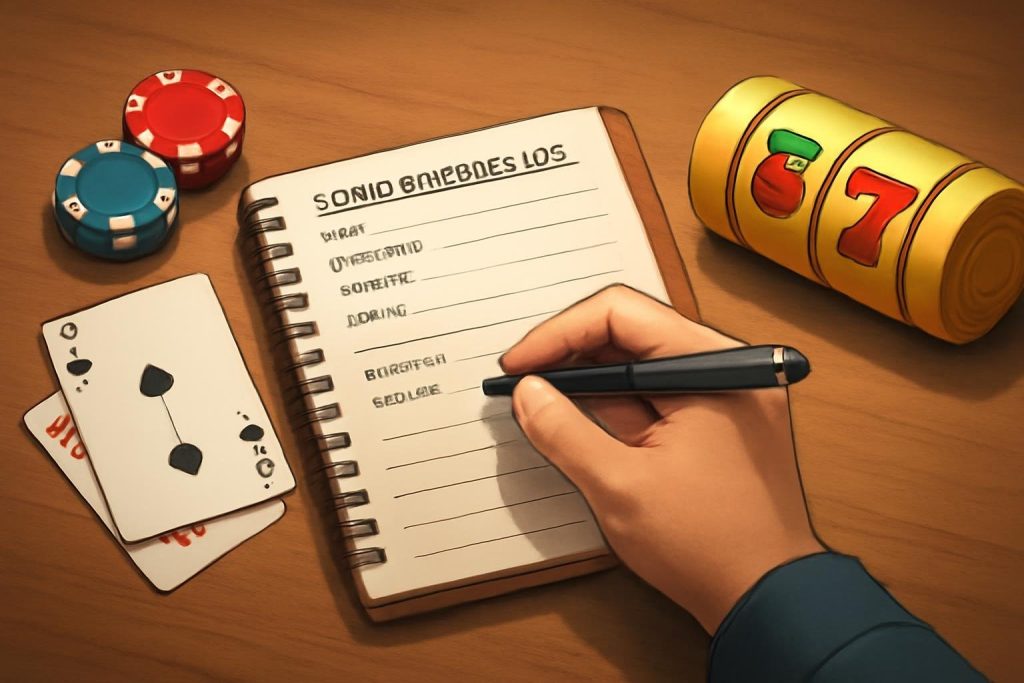
A gambling session can feel straightforward while it is happening, then become hard to recall afterward. A brief session log helps you see what you spent, how long you played, and whether you followed your own limits. It is a record—not a strategy for predicting results or improving the chance of winning.
You can use a notebook or a private digital file. Keep the details simple enough that you will actually record them, and never include passwords, payment card details, or other sensitive account information.
Decide what counts as one session
Choose a clear start and end point. For example, you might treat a single period of play as one session and start a new entry after you have stopped and taken a meaningful break. The exact definition matters less than applying it consistently.
Record the date, approximate start and finish times, and the games or betting products involved. If you switched from a slot game to roulette, note the change rather than grouping the whole period under one label. This makes the record easier to review without relying on memory.
Track money in and money out
Write down the amount you planned to risk before play, any deposits made during the session, and the amount remaining or withdrawn when you stopped. Then calculate the net result for that session. Keep deposits separate from wagers: a deposit is money added to an account, while wagers are the amounts staked during play. They are not interchangeable measures.
For instance, if a player starts with a set amount, adds more funds halfway through, and ends with less than the total deposited, the log should show both deposits and the ending balance. That makes the session’s overall cash result clearer than noting only the last bet or the amount of a single win.
Decide in advance whether to record amounts in exact figures or rounded figures, and use the same method each time. If you want a broader framework for setting spending limits, see this guide to managing a casino bankroll.
Note the conditions that affect your decisions
Numbers alone do not explain why a session went off plan. Add a short note about relevant circumstances, such as playing while tired, extending the session after a loss, or stopping when the planned time was up. Keep this factual and brief; it is not a judgment about yourself.
For games with changing stakes or features, record only details that help explain your choices. In a slot session, that might be whether you changed the bet size. In a sports bet, it might be the type of market you chose. Before playing an unfamiliar game, check its rules and limits; the guide to reading online casino game rules covers details worth reviewing.
Review the log without treating it as a prediction tool
Look over a few entries at a time and ask practical questions:
- Did I stay within the amount and time I had set?
- Did I add funds or raise stakes after an unexpected result?
- Were there situations in which I found it difficult to stop?
- Did I play when I was distracted, upset, or short on sleep?
A short run of wins or losses does not establish what will happen in the next session. A log can help identify habits and make spending more visible, but it cannot make a game predictable or turn gambling into reliable income. Avoid using past results to justify larger bets or to chase a loss.
If reviewing your records shows repeated overspending, hidden play, or difficulty stopping, consider taking a break and seeking support from a trusted person or a relevant local support service. A separate guide lists signs it may be time to quit a casino game.
Make the log easy to maintain
Use a simple format: date; start and end time; game or market; planned limit; deposits; ending amount; net result; and one brief note. Fill it in soon after play, while details are fresh. If you cannot remember an amount, mark it as unknown rather than guessing.
The useful outcome is not a perfect spreadsheet. It is a clearer record that helps you notice whether your choices match your limits. If maintaining the log feels uncomfortable because it exposes spending you would rather conceal, treat that as a reason to pause rather than a reason to stop keeping records.